This Morocco travel guide is written by our local team, a Berber family from Merzouga that has been showing travellers around Morocco for years. It gathers everything you need to plan a trip to Morocco in one place: where to go, how many days you need, the best time to travel, how to get around, what it costs and the cultural tips that make the difference. Each section links to a deeper guide when you want more detail.
In short: fly into Marrakech, Fes, Casablanca or Tangier, plan at least 7 days, include one night in the Sahara, travel in spring or autumn, carry cash in dirhams and use a private driver for the long roads south of the Atlas.
Morocco at a glance
| Capital | Rabat |
| Largest city | Casablanca |
| Languages | Arabic and Amazigh (Berber); French widely spoken; Spanish in the north; English in tourist areas |
| Currency | Moroccan dirham (MAD), a closed currency you buy on arrival |
| Plugs | Type C and E, 220 V (European plugs) |
| Main airports | Marrakech, Casablanca, Fes, Tangier, Agadir, Ouarzazate |
| UNESCO sites | The medinas of Fes and Marrakech, Ait Ben Haddou, Volubilis, Meknes, Essaouira and more |
| Best months | March to May and September to November |
Where to go in Morocco: the main regions
For ideas on what to experience in each region, see our list of the best things to do in Morocco.
Marrakech, the Red City
Most trips to Morocco start in Marrakech. Its UNESCO-listed medina is full of souks, palaces and riads, and the Jemaa el-Fna square comes alive every evening with food stalls and storytellers. Spend at least two days here; our guide to Marrakech in 3 days shows how. From the city you can easily take day trips from Marrakech to the Ourika Valley, Essaouira, the Ouzoud waterfalls or the stony Agafay desert.
Fes and the imperial cities
Fes is the spiritual and cultural heart of Morocco. Its medieval medina, Fes el-Bali, is one of the largest car-free urban areas in the world, with tanneries, madrasas and thousands of lanes. Nearby are imperial Meknes and the Roman ruins of Volubilis. Not sure which city to choose? Read Fes vs Marrakech.
The Sahara desert
For many travellers, a night in the dunes is the highlight of Morocco. The high dunes of Erg Chebbi, near Merzouga, are about 560 km from Marrakech, so you need at least three days. Zagora is closer but its dunes are smaller; compare them in Merzouga vs Zagora. You reach the camp on a camel trek in Merzouga at sunset and sleep under the stars. See all our Morocco desert tours.
The High Atlas and the kasbahs
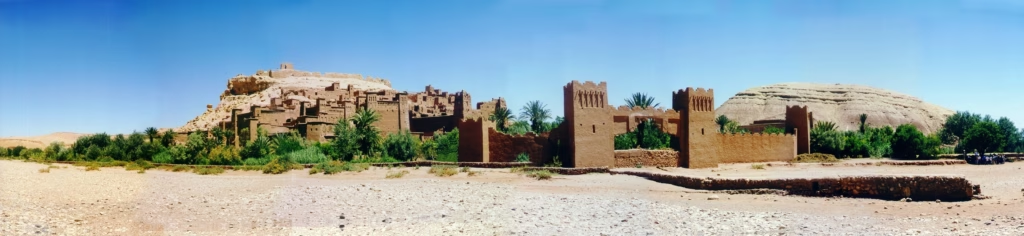
Between Marrakech and the desert, the road crosses the High Atlas at the Tizi n’Tichka pass and reaches Ait Ben Haddou, the famous earthen ksar. Then come Ouarzazate, the Dades and Todra gorges and the Road of a Thousand Kasbahs. Hikers can climb North Africa’s highest peak: see how to climb Mount Toubkal.
The north: Chefchaouen and Tangier
The blue town of Chefchaouen sits in the Rif Mountains, and Tangier, just 35 minutes by ferry from Spain, is the gateway to the north. See things to do in Chefchaouen and things to do in Tangier.
The Atlantic coast
Staying in Agadir? See the best day trips from Agadir.
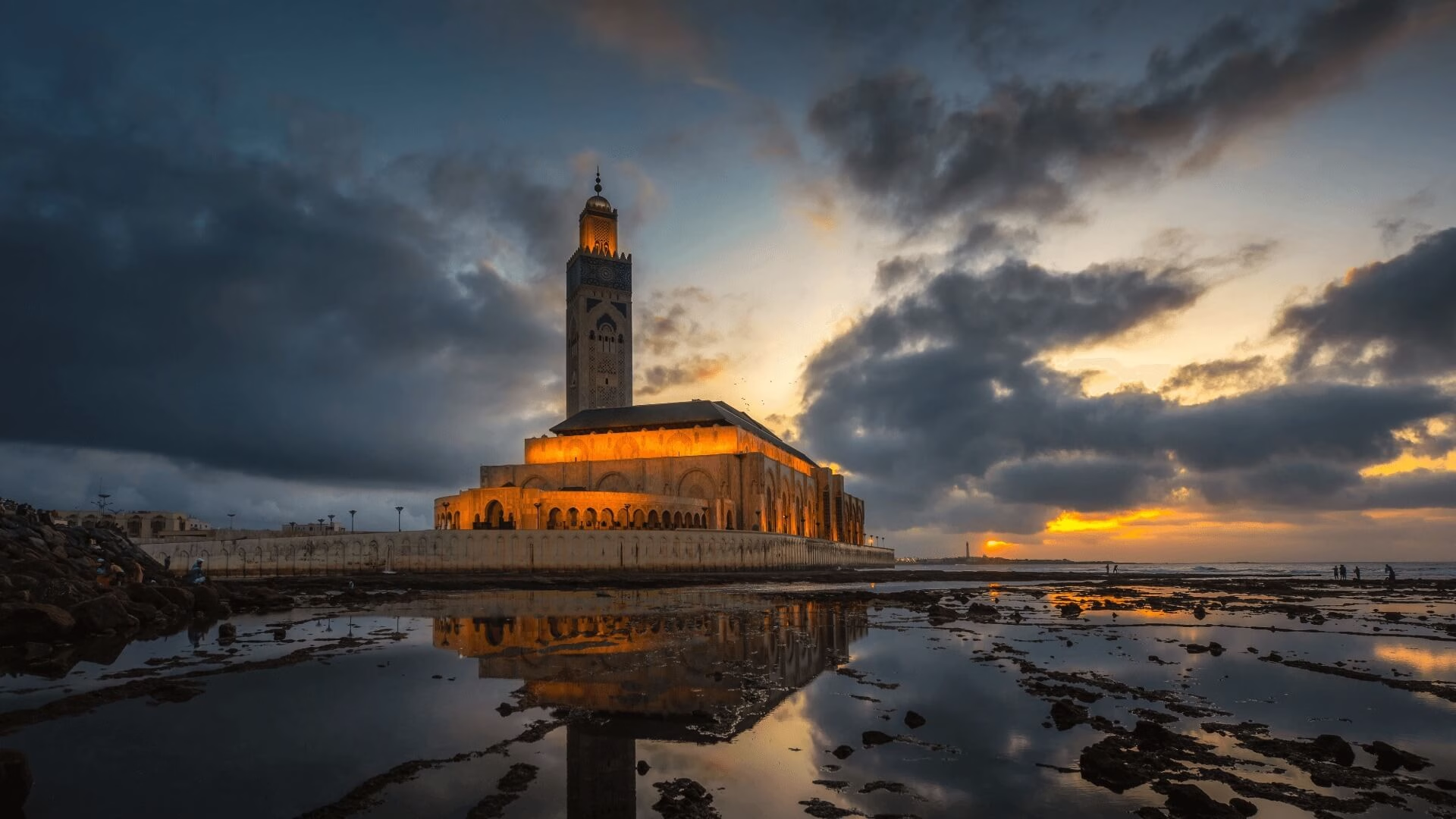
Essaouira, with its windswept ramparts and fishing port, is the most charming town on the coast, and Casablanca has the monumental Hassan II Mosque, one of the few mosques open to non-Muslims. See things to do in Casablanca.
How many days do you need in Morocco?
- 3–5 days: Marrakech plus a short desert trip, or Marrakech plus Essaouira.
- 7 days: the classic first trip: Marrakech, the Atlas, one night in the Sahara and Fes. See our Morocco itinerary 7 days.
- 10 days: add Chefchaouen or the coast at a calmer pace: Morocco itinerary 10 days.
- 2 weeks: the whole country from Tangier to the Sahara: Morocco itinerary 2 weeks.
All our routes are collected in Morocco itineraries, and our guide on how many days in Morocco helps you choose.
When is the best time to travel to Morocco?
Spring (March to May) and autumn (September to November) are the best seasons: warm days, comfortable cities and pleasant nights in the desert. Summer is very hot inland, with more than 40 °C in the Sahara, but fine on the coast and in the mountains. Winter is sunny in Marrakech, but desert nights drop close to 0 °C and the Atlas passes can get snow. Month-by-month details are in our guide on the best time to visit Morocco.
Getting to Morocco
Morocco has direct flights from most European capitals and several from North America and the Middle East. Marrakech and Casablanca are the busiest airports; Casablanca receives most long-haul flights. From Spain you can also take the ferry from Tarifa or Algeciras to Tangier. Book an open-jaw ticket, for example into Marrakech and out of Fes, so you do not drive the same road twice.
Entry: many nationalities, including citizens of the EU, the UK, the US, Canada and Australia, can visit Morocco for up to 90 days without a visa, with a passport valid for at least six months. Always check the current rules for your nationality before you travel.
Getting around Morocco
- Train: fast and comfortable between Tangier, Rabat, Casablanca, Fes and Marrakech. The Al Boraq high-speed train links Tangier and Casablanca in just over two hours.
- Bus: CTM and Supratours connect most towns.
- Car hire: possible, but driving in the medinas and on long mountain roads is tiring.
- Private driver: the most comfortable way to reach the Sahara, the Atlas and the gorges, where there is no train. See our private driver in Morocco.
How much does a trip to Morocco cost?
Morocco suits every budget, from simple guesthouses to luxury riads and desert camps. The main costs are accommodation, transport and guides. Street food and local restaurants are cheap, while riads with a pool and luxury camps raise the budget. On a private tour, the price per person drops as the group grows because the vehicle and driver are shared. For reference, our 3 days Marrakech to Merzouga desert tour starts from €500 per person. Full breakdown: Morocco tour cost.
Money, phones and practical tips
- Cash: the dirham cannot be bought abroad in most countries, so exchange money or use an ATM on arrival. Souks, taxis and small cafés take cash only.
- Cards: accepted in most hotels and larger restaurants.
- Tipping: customary for guides, drivers and waiters.
- SIM card: Maroc Telecom, Orange and inwi sell cheap data SIMs at airports.
- Water: drink bottled water.
More advice in our Morocco travel tips.
Culture and etiquette
- Dress: cover shoulders and knees in medinas and villages. See what to wear in Morocco.
- Photos: always ask before photographing people.
- Mosques: most are closed to non-Muslims, except the Hassan II Mosque in Casablanca.
- Bargaining: normal in the souks; smile, take your time and agree on the price before you buy.
- Ramadan: during the month of fasting some restaurants close in the daytime, but travel works normally.
- Friday: the day of prayer; some shops close at midday.
Is Morocco safe?
Yes, for the vast majority of travellers. Violent crime against tourists is rare, and the main annoyances are persistent sellers and fake guides in the medinas. Read our full guide: is Morocco safe for tourists.
What to eat in Morocco
Try tagine slow-cooked in its clay pot, couscous (traditionally on Fridays), harira soup, pastilla with pigeon or chicken, msemen pancakes for breakfast and the ever-present mint tea. In the desert, ask for Berber pizza (madfouna), baked in the sand near Merzouga.
What to pack
Light, modest clothes for the cities, comfortable shoes for the medinas, a warm layer for desert nights and the Atlas, sunglasses, sunscreen and a scarf for sun and sand. Full list: what to pack for the Sahara desert.
Local tip from our team: do not try to see everything. Choose one route and live it slowly: the best memories of Morocco are tea with a nomad family, a sunrise on the dunes or an evening on a riad terrace, not another hour in the car.
Morocco travel guide: FAQ
Is Morocco good for a first trip outside Europe?
Yes. It is close to Europe, safe, varied and easy to travel with a local driver or guide.
Do I need a visa for Morocco?
Citizens of many countries, including the EU, the UK, the US and Canada, do not need a visa for stays of up to 90 days. Check the rules for your nationality.
What language is spoken in Morocco?
Arabic and Amazigh are the official languages. French is widely spoken, Spanish in the north, and English in most tourist areas.
Can I drink alcohol in Morocco?
Yes, in many hotels, licensed riads and tourist restaurants, but not in public.
Is it better to travel independently or on a tour?
The cities are easy on your own. For the desert and the Atlas, a private driver saves time and stress. See our Morocco tours or a tailor-made Morocco tour.
How many days do I need in Morocco?
At least 7 days for a first trip with the desert; 10 to 14 days to see the north, the imperial cities and the Sahara calmly.
Plan your trip to Morocco with a local team
We are a Berber family company from Merzouga. Mohamed Ait Bahaddou and his brothers Said and Mustapha design every private route themselves, with drivers who speak English and Spanish. Browse our Morocco tours, our cultural tours in Morocco, or tell us your dates and we will build the trip for you.
Private tour · Built around you
Ready to travel to Morocco?
Tell us your dates and group size. We will send you a private route with your own driver, hand-picked riads and the price.
- Send us your dates and group size.
- We reply with a private day-by-day route and the price.
- You change anything you like; nothing is paid until you agree the plan.
★★★★★ 5.0 from 522 reviews on Tripadvisor